

If you're preparing for competitive exams, one of the first decisions you need to make is where you're going to study. Many candidates start at home, but quickly discover that domestic distractions, a lack of structured routine, and family interruptions make it difficult to concentrate on such a demanding process. Then the dilemma arises: public library or coworking space?
Both options have clear advantages and important limitations that you should be aware of before making a decision. Public libraries are free and offer a traditional study environment, but they face serious problems with overcrowding during exam periods, limited hours, and a lack of complementary services. Coworking spaces require a monthly investment, but they provide complete flexibility in scheduling, professional amenities, and an environment specifically designed for long-term productivity.
In this guide, we objectively analyze both options based on the real-world experience of candidates in Madrid, compare their advantages and disadvantages without commercial bias, and help you decide which one best suits your personal situation, budget, and study style.
The reality of studying in public libraries in Madrid
Public libraries are the first destination for thousands of exam candidates. They are free, spread throughout the city, and offer a conducive study environment. However, the actual experience presents significant challenges.
Real advantages of libraries
Completely free. You don't pay an entrance fee, monthly fee, or registration fee. For those preparing for competitive exams on a tight budget, the unemployed without benefits, or those just starting out who don't know how long they'll be studying, this is a crucial factor. You can allocate all your financial resources to study materials, tutoring, or exam fees.
Established study environment. Libraries are designed exclusively for studying. Everyone is focused on their tasks, creating an environment conducive to intellectual work. There are no temptations of leisure or distractions typical of home, such as television, bed, or unfinished chores.
Access to bibliographic resources. Although most candidates study with materials from their academy, having access to updated legislation, legal dictionaries, specialized encyclopedias or databases can be useful occasionally for specific queries or to expand on complex concepts.
Extensive network throughout Madrid. With over 30 municipal libraries strategically located throughout the city, it's easy to find one near your home. You can choose based on your location or try several until you find the one that works best for you.
Major drawbacks
Overcrowding during exam periods. From January to June, libraries are overcrowded. Queuing from 8:30 a.m. to get a place is common. Many exam candidates lose 30-60 minutes a day waiting.
At public libraries like Eugenio Trías, María Moliner, or Ana María Matute, the queues are constant. The situation worsens on weekends.
Limited hours. They are generally open from 9:00 to 21:00 and closed on Sundays. In August, many reduce their hours or close altogether. Closures due to holidays, long weekends, or breakdowns are frequent.
No leaving materials. Every day you have to carry all your materials: study guides, codes, folders, computer. For candidates with extensive study materials, this means transporting 5-10 kilos daily.
Noise and distractions. Although the spaces are quiet, there are people dragging chairs, coughing, using cell phones, and coming and going. Controlling the behavior of 100-200 people is practically impossible.
Basic furniture. The chairs are not designed for 6-8 hour workdays. They are basic, without adjustment or adequate lumbar support. Many candidates develop back pain after months of use.
The tables are shared (4-6 people), with barely 60-70 cm of personal space. Insufficient if you're studying with a computer, study materials, notebook, and coffee.
Irregular temperature. Air conditioning doesn't always work properly. Temperature fluctuations affect concentration.
Lack of services. There are no decent coffee machines, no eating areas, or spaces for undisturbed breaks. If you need to eat, you have to leave and lose your seat.
Coworking spaces for those preparing for competitive exams
Coworking spaces have evolved to cater specifically to those preparing for competitive exams. They are spaces designed for long study sessions with all the necessary amenities.
Advantages of coworking
Guaranteed position. You reserve a fixed spot each month and that space is yours. You arrive whenever you want and your spot will be waiting for you.
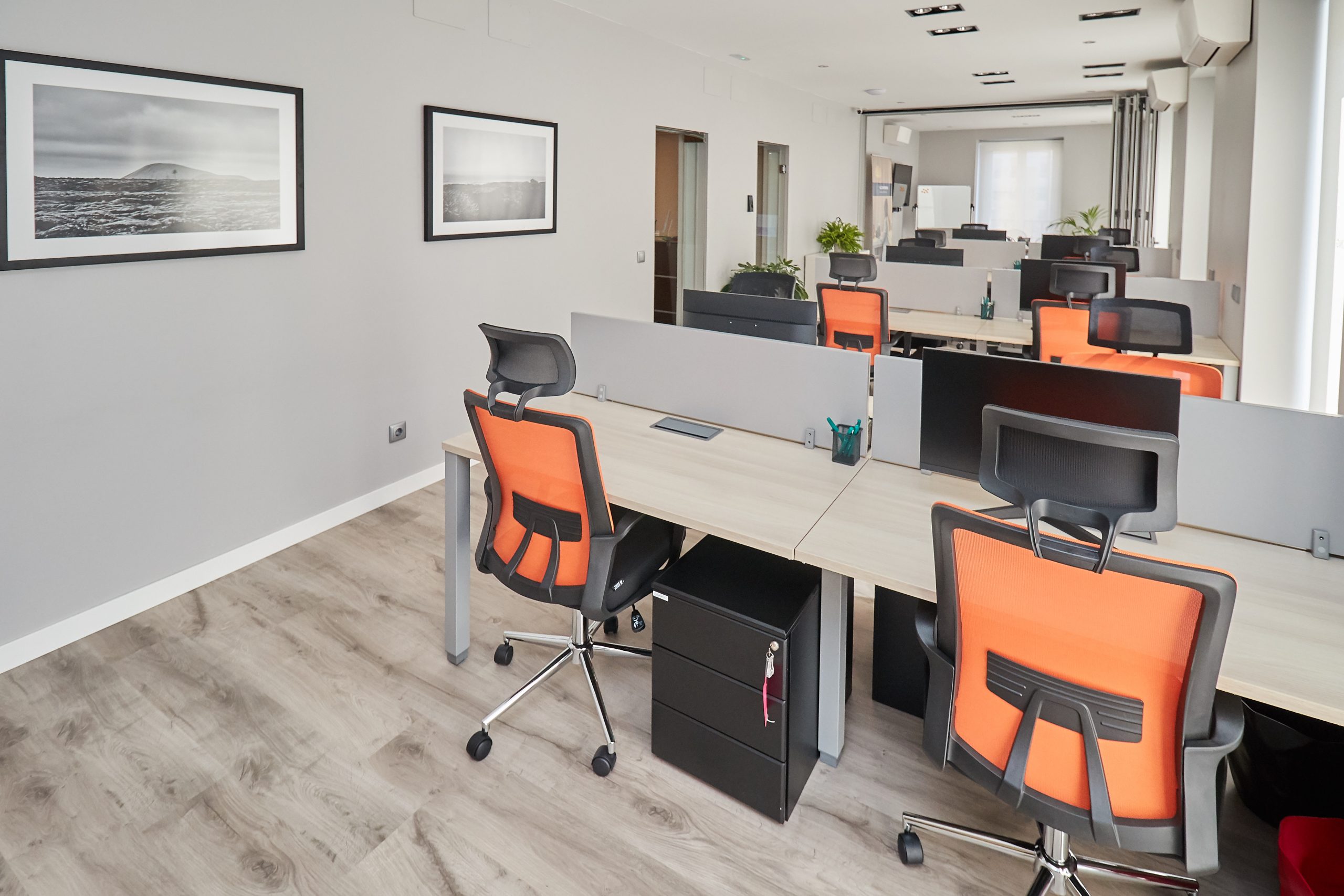
Ergonomic furniture. Chairs with lumbar support, height adjustment, armrests, and reclining backrest. Designed for 8+ hours of use. Spacious individual desks (120×60 cm minimum).
Professional environment. Strict rules of silence. Everyone is preparing for competitive exams, working, or studying. The level of concentration is higher.
Services included. Fiber optic WiFi, adjustable climate control, optimal LED lighting, printing and scanning, separate rest area, coffee machines, microwave and refrigerator, reception and access control.
Motivating community. Studying for a competitive exam is a solitary and arduous process that can last for years. Being surrounded by people in the same situation creates a motivating environment that combats isolation. You can exchange experiences during breaks, share effective study techniques, recommend academies or materials, and simply feel part of a community that understands exactly what you're going through. This psychological factor can make the difference between giving up after six months or persevering until you pass.
Differentiated zones according to need. Good spaces have areas of absolute silence for maximum concentration, areas of relative silence where you can whisper or take short calls without disturbing others, meeting rooms for studying in groups if you come with academy classmates, and completely separate rest areas where you can talk freely, eat, or simply disconnect for 15 minutes without feeling like you are bothering anyone.
Which one suits you best based on your profile?
The library can function if…
Very tight budget. If you are unemployed, have limited savings and no income, free tuition is a key factor.
Very disciplined. If you have an exceptional ability to concentrate, you easily ignore noise and are not affected by discomfort.
Short period. If you only study for 1-2 months (final review phase), enduring the discomfort is manageable.
Flexible hours. If you can go at 8:30 every morning, the 9:00-21:00 schedule covers you perfectly.
Nearby library, not crowded. If you have one 5 minutes away that doesn't have major queues.
Coworking is better if…
You can afford the cost. If you have savings, partial income, family support, or unemployment benefits.
Long-term study. For competitive exams lasting 6+ months, especially for A1 or A2 levels of high difficulty.
You need flexibility. If you work shifts, irregular hours, prefer to study at night, or need availability on holidays.
Extensive syllabus. Candidates for justice, state administration or any specialty with 30-80 topics that involve carrying kilos of material.
You value your health. If you have back problems or want to prevent injuries, an ergonomic workstation is an investment in your health.
You get distracted easily. If noise and interruptions constantly break your concentration.
Looking for community?. Being surrounded by people in your situation can be the factor that makes the difference between giving up and persisting.
The hybrid option
Many candidates combine both options depending on the study phase and the time of the month.
Library for light reviews. Short review or reading sessions without extreme concentration, reducing the cost of coworking.
Coworking for intense sessions. Serious 6-8 hour days where you need maximum concentration and comfort.
Alternative depending on budget. Hire a coworking space when your finances allow, return to the library when you need to cut costs.
Coworking during exam time. During the 2-3 months prior to the exam, when the intensity is at its peak and libraries are saturated.
Frequently Asked Questions
Can I study in cafes as an alternative?
Cafeterias are fine for short sessions (2-3 hours), but they have limitations: mandatory purchases, constant noise, small tables, slow Wi-Fi, and a lack of power outlets. Studying for 8 hours a day ends up being expensive in food and drinks (€200-250/month).
Do libraries have specific spaces for those preparing for competitive exams?
Some regional libraries, like Joaquín Leguina, have separate rooms, but not exclusively for those preparing for competitive exams. You'll be competing with university students, language students, and other users.
Is it better to start at the library and then switch later?
It's a valid strategy. Try library work for 1-2 months while you define your method and confirm you can stick with it. If the inconveniences bother you, switch to coworking with more conviction.
What happens if the coworking space is full?
Reputable venues control capacity and don't sell more spots than are available. If you book a fixed spot, it's always guaranteed. You're not dependent on daily availability.
Conclusion: Make the right decision for yourself
There's no universal answer, but there is a right answer for you. The decision depends on your financial situation, your concentration level, the duration of your studies, and your priorities.
If your budget is very limited, The library is your best option, and thousands pass their exams every year by studying there. It's uncomfortable and challenging, but it's possible. Find the least crowded library, arrive early, and develop strategies to minimize distractions. Accept that discomfort is part of the process if you can't afford a coworking space.
If you can afford it, Coworking dramatically improves your study experience. This is not only due to the physical comforts (ergonomic chair, guaranteed space, quiet), but also to the psychological impact of studying in a professional environment designed for your success. Investing in a good environment is investing in your health, efficiency, and likelihood of passing your exams.
Be honest with yourself. If the library causes you daily anxiety, the queues frustrate you, you come home with back pain, or the noise constantly distracts you, it's not sustainable for 12-24 months. Your health is more important than saving on a library card. Conversely, if the library works well for you and the expense of coworking would strain your budget too much, there's no reason to force the change.
RememberWhat matters isn't where you study, but that you study consistently, methodically, and with dedication. The best place won't guarantee you a passing grade; the worst won't prevent you from passing if your commitment is total. But choosing the right environment makes all the difference between a sustainable study process and one that exhausts you before the exam.
ILCOWORKING provides a professional environment with integrated services (secretarial, reprographics, coffee break), a strategic location in Chamberí, with the added advantage of having legal and accounting advice available.
Evaluate how much you value services like a professional reception area, a rest area, natural light, and personalized attention. If these factors significantly improve your productivity, investing in coworking can be more cost-effective than studying in basic conditions.
For more information about ILCOWORKING:
- Phone: +34 91 117 94 82
- E-mail: info@ilcoworking.es
- Address: Glorieta de Bilbao nº 1, 3rd floor, right, Madrid
Visit the facilities and see for yourself if the space suits your needs.

