

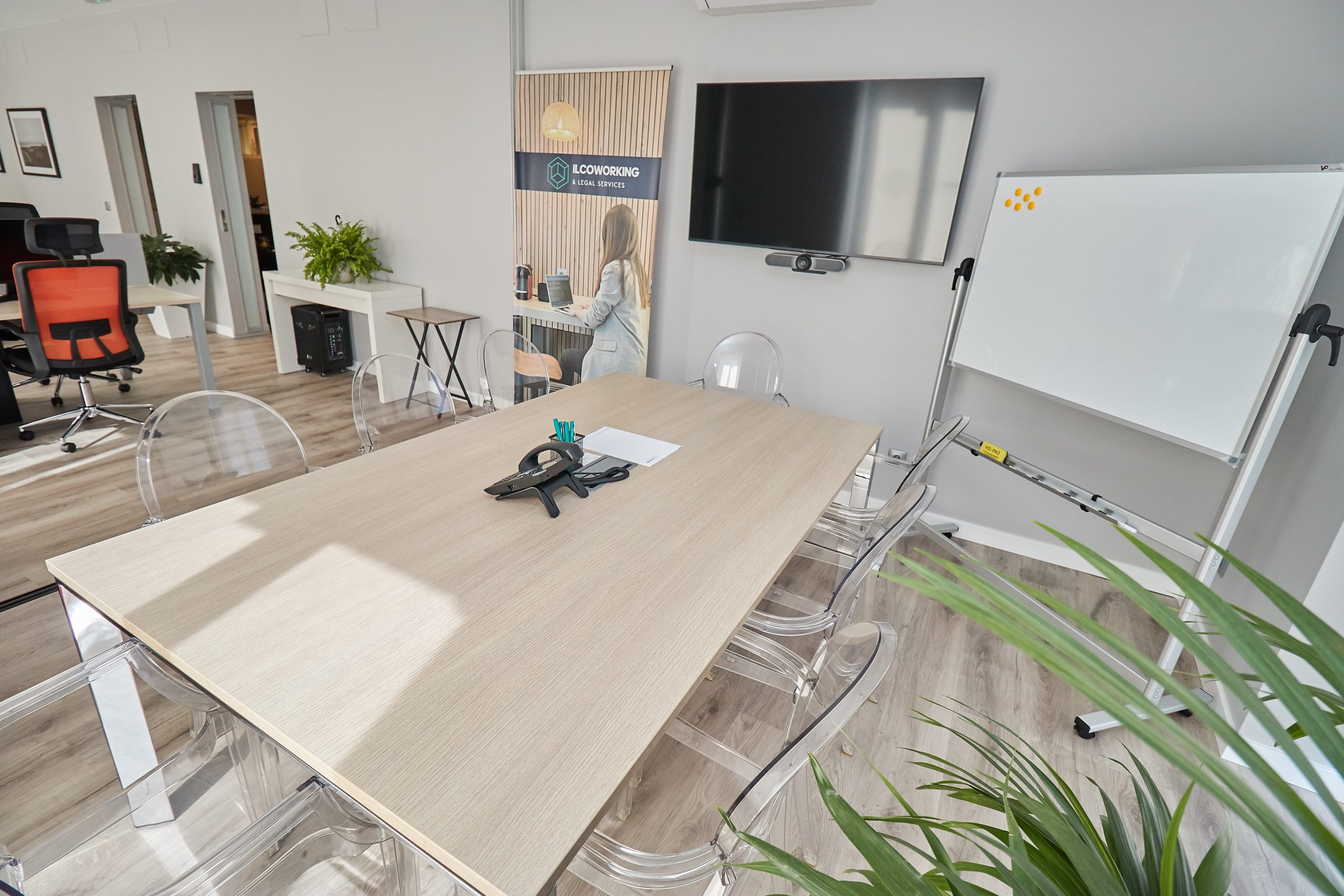
A masterclass is not a course. Nor is it a lecture or a workshop. It's a format with its own identity, combining high-density content, access to an expert with a proven track record, and an in-person experience that participants perceive as different from conventional training. That's why they pay more for it, and why the venue matters in a way that isn't as important in other training formats.
The question many trainers and professionals ask themselves when organizing their first in-person masterclass is the same: Where should I hold it? The answer isn't just a matter of location. It's a decision that directly impacts the price you can charge, the attendees' perception of value, and whether or not the event meets the expectations you've set.
Why space is part of the product in a masterclass
In a paid masterclass, attendees aren't just buying information. They're buying an experience. Being physically in the same space as the expert, being able to ask questions in real time, and sharing that moment with others who have similar interests all contribute to justifying the price of admission.
When the venue doesn't live up to the price charged, there's a dissonance that attendees perceive, even if they don't always articulate it explicitly. A €300 masterclass held in a corporate meeting room with uncomfortable chairs and a faulty projector creates an experience that contradicts the promised value. Conversely, a well-chosen venue reinforces the perception that what's being received is worth the price.
This is one of the strongest arguments for investing in a professional space when organizing a masterclass, especially if it's the first of a new format or if you're building a reputation in your area of expertise.
What differentiates a room suitable for masterclasses from a conventional meeting room?
Most meeting rooms are designed for gatherings between people who already know each other and work together. The long or oval table configuration, basic projection equipment, and limited size cater to those needs. But an in-person masterclass has different requirements.
Visibility is the primary factor. All attendees must be able to clearly see the speaker and the projected materials, without anyone being in a blind spot or too far from the screen. For groups of 15 to 40 people, this requires a setup where the speaker is clearly elevated or separated from the audience area, with a sufficiently large screen or projector.
Acoustics determine whether attendees can listen effortlessly for hours. A room with echoes, external noise leaks, or an inadequate audio system generates auditory fatigue that accumulates throughout the session and reduces the perceived quality of the event. spaces designed for training, Acoustic treatment is part of the design, not an extra.
Seating configuration influences attention. Chairs without backrests, or those too close together, generate physical discomfort that, after two hours, competes with attention to the content. Attendees who are uncomfortable start looking at their watches sooner than those who are comfortably seated.
The overall atmosphere communicates something before the speaker even says a word. The right temperature, appropriate lighting, a clean and tidy space, and the absence of distractions—all of these elements either build or destroy the receptive mindset you need in your audience from the very beginning.
Visual production: why some masterclasses seem more professional
When attendees share their experience at your masterclass on social media, the photos they post provide free advertising for your personal brand. The background behind the speaker, the image quality, and the overall feel of the space in those photos communicate the quality of your offering to those who haven't yet attended.
A space with an appropriate visual backdrop, lighting that flatters the speaker's image, and an environment that conveys professionalism produces photos that reinforce the perception of value. An improvised space produces photos that raise doubts.
This is especially important if you record the masterclass to later sell it as asynchronous content or to share excerpts as examples of your work. The visual quality of the recording space is part of the perceived quality of the product you're selling.
The classrooms with appropriate technical equipment They facilitate both recording during the event and the production of video clips for later use. This multiplies the value of the investment in space because the content continues to be relevant long after the event day.
The assistant's journey from arrival to departure
The experience of attendees at a masterclass doesn't begin when the speaker opens their mouth. It begins the moment they arrive at the building.
The ease of finding the space, the warm welcome upon arrival, and the first few minutes before the session begins create a first impression that colors everything that follows. A confusing arrival, without clear signage and with no one to greet the attendees, generates initial tension that takes several minutes of content to dissipate.
The location in an accessible and well-known area makes it easy for attendees to arrive with plenty of time and without the stress of complicated travel. location like Chamberí, With efficient public transport and clear references, it reduces late arrivals and the nervousness of those who do not know the area.
The breaks are also part of the experience. Where is the coffee served? Is there space for attendees to chat during the breaks? Does the overall atmosphere encourage people to stay and network or leave as soon as the formal session ends? Many attendees value what happens during the breaks as much as the speaker's content, because that's where real networking takes place.
The closing of the event, the final minutes, and the departure also matter. A space that allows the speaker to be available for individual questions after the formal session, without the group having to disperse immediately, facilitates those valuable conversations that are often the most impactful moment for attendees.
Ideal size and configuration for masterclasses
The optimal size of a face-to-face masterclass depends on the business model and the speaker's value proposition, but there are some general considerations that apply to most formats.
Groups that are too small (fewer than ten people) can lose the collective energy that is part of the value of the in-person experience. Groups that are too large (more than fifty people) hinder interaction and the sense of close access to the expert that distinguishes a masterclass from a lecture.
The range of 20 to 35 people is usually the point where group energy works, interaction is possible, and the space can be configured so that everyone has good visibility and can hear well. classrooms for rent in Madrid geared towards this type of event, this is the most frequent capacity range.
The theater-style seating arrangement (rows of chairs facing the speaker) maximizes capacity but reduces interactivity. A U-shaped or semicircular configuration facilitates participation but requires more space per person. For masterclasses where interaction with the speaker is key, the second option often yields better results, even though it accommodates fewer people.
How to calculate if the cost of space fits the model
The cost of the space for a masterclass should be analyzed as a percentage of the total revenue of the event, not as an isolated figure.
If a four-hour masterclass for 25 people at €150 per attendee generates €3,750 in gross revenue, the cost of a professional classroom for those four hours, plus preparation and cleanup, represents a percentage that in most cases is less than 151% of the revenue. This is a perfectly manageable cost structure for a format designed to generate profit margin.
The most common mistake is evaluating the cost of the venue as an absolute without considering the revenue it generates. A cheaper room in a less desirable location or with inferior equipment can reduce the registration conversion rate, force organizers to charge less, or create an experience that damages the event's reputation for future editions. The true cost of the decision includes all these factors.
Frequently asked questions about masterclass spaces
Can I record the masterclass in space? In most rental spaces, recording for personal use is permitted. Check the terms and conditions before booking, especially if you plan to publish the content commercially.
How far in advance do I need to book? For events with a fixed date and a significant number of attendees, booking at least two or three weeks in advance ensures availability. On peak dates, especially Thursdays and Fridays, it's advisable to book even earlier.
Can I access the space before the start time to prepare? Most venues allow early access for setup, usually 30-60 minutes before the session begins. Please confirm this when booking, as setup time affects the total cost if you are charged per hour of actual use.
What do I do if I need to cancel? Cancellation policies vary from venue to venue. Typically, cancellations are free with 48-72 hours' notice, and a proportional penalty applies for cancellations made later. Knowing these conditions before booking will help you avoid surprises.
For information on availability and conditions for renting classrooms for masterclasses, please contact ILCOWORKING. info@ilcoworking.es, 91 117 94 82, or 900 264 918. The space is located at Glorieta de Bilbao nº 1, 3rd right, Madrid, one minute from the Bilbao metro.

