

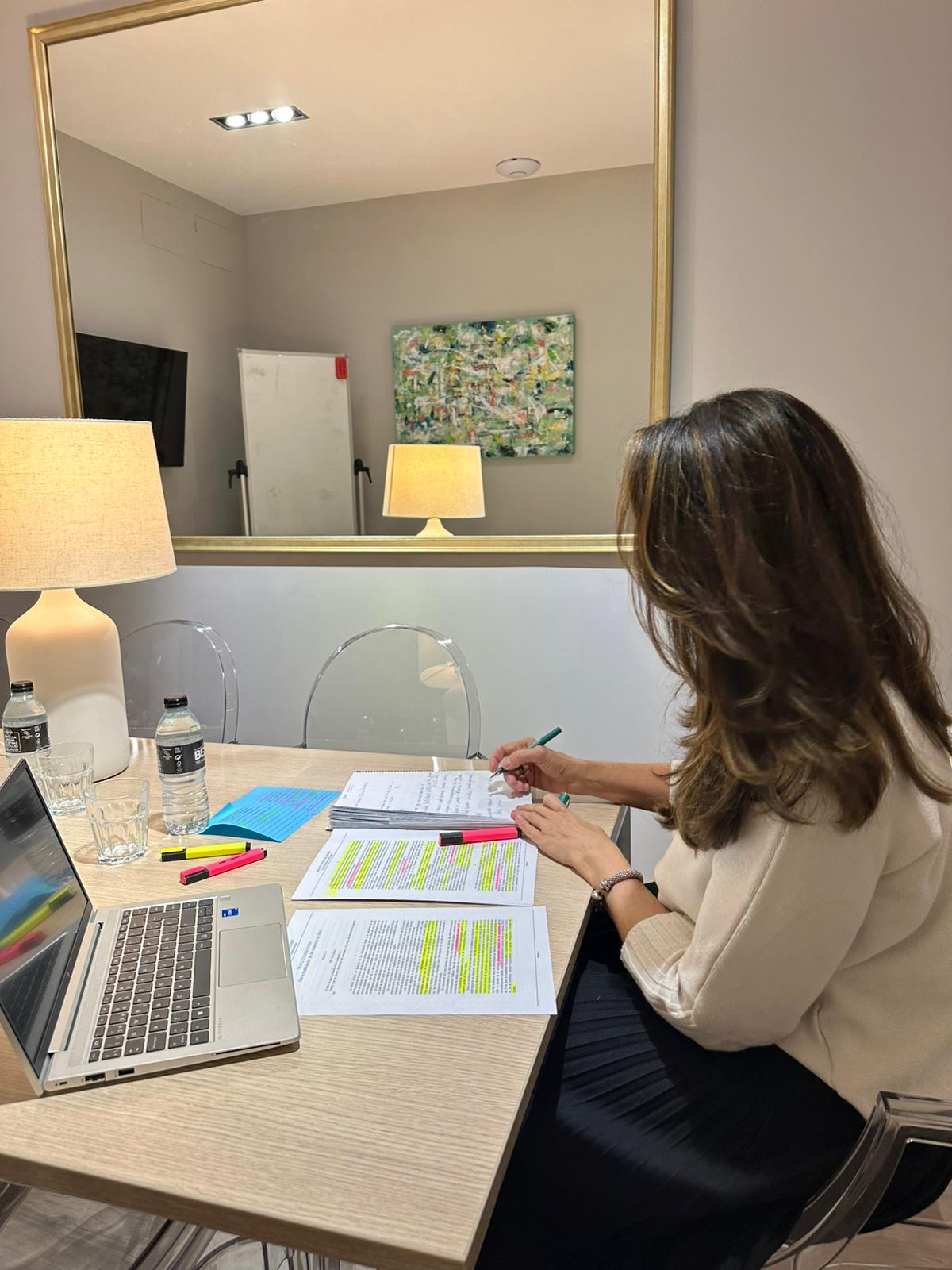
Study Spaces for Candidates in Madrid: Complete Guide 2026
Preparing for competitive exams from home is one of the biggest challenges candidates face. Constant distractions, the lack of a dedicated study environment, noise from family or neighbors, and the difficulty of maintaining a disciplined routine all take their toll on your performance. If you've ever thought, "I need a space outside the house to study seriously," this article is for you.
In this guide, I explain why more and more candidates in Madrid are opting for professional study spaces instead of public libraries, what characteristics a good space for preparing for competitive exams should have, how much it really costs, and how to choose the perfect place to maximize your effective study hours.
Why opposition members need a space outside the home
Studying for competitive exams requires between 6 and 10 hours of intense concentration daily for months or even years. Very few homes are equipped to provide the conditions you need to maintain that study pace without your mental health or performance suffering.
The problem with studying at home is that you never disconnect. Your brain doesn't differentiate between your study space and your rest space. The dining room table where you have breakfast is the same one where you spend eight hours studying administrative law. Your bedroom, which should be your sanctuary for sleep, becomes a cell filled with notes and study materials. This lack of physical separation between work and rest generates anxiety, insomnia, and mental exhaustion.
Distractions at home are constant and unavoidable. The doorbell rings, the washing machine finishes, the neighbor drills, family members come and go, the temptation of the refrigerator three meters away, Netflix on the computer where you're studying. Even with the best intentions in the world, each interruption pulls you out of your state of deep concentration, and you need between 15 and 25 minutes to get back to that level of focus.
Discipline is much more difficult to maintain in a family environment. When you're at home, it's easy to justify 30-minute "breaks" that turn into two hours. It's tempting to start at 10:00 instead of 8:30. It's difficult to tell your family you can't help with an urgent assignment because you're studying. In an external study space, your only responsibility is to study, and that mental clarity is invaluable.
The social isolation of the candidate studying alone at home takes its toll. Spending months with hardly any human contact, without seeing anyone going through the same thing, without being able to discuss your doubts or frustrations with someone who understands you, breeds loneliness and demotivation. Many candidates give up not because they're incapable, but because the solitary process becomes emotionally unbearable.
A professional study space solves all these problems at once. You leave home, switch into study mode, work in an environment designed for productive work, share space with other professionals and students who respect your concentration, and when your day is over, you go home and can truly disconnect.
Difference between a public library and a private study space
Many candidates start studying in public libraries because they are free, but they soon discover that the limitations far outweigh the economic savings.
Public libraries: real advantages and disadvantages
Madrid's public libraries are elegant and accessible spaces, but they are not specifically designed for those preparing for competitive exams who need to study 8-10 hours a day for months.
The main problem is the brutal overcrowding during exam periods. Between January and June, getting a spot in libraries like Eugenio Trías, María Moliner, or the district municipal libraries is nearly impossible if you don't queue an hour before opening time. Experienced exam takers know that if you're not at the door by 7:30 in the morning, you'll be left without a spot until 3:00 p.m., when some people leave.
The limited hours They are another major obstacle. Most libraries are open from 9:00 a.m. to 9:00 p.m. on weekdays, but are closed all day Sunday and Saturday afternoons. If your study schedule requires you to get up very early or study late, or if weekends are your most productive days, libraries won't work for you.
He ambient noise It's bigger than you think. Even with quiet rules, with 200 people in a room there's always movement: people coming and going, chairs scraping, coughing, murmuring, vibrating cell phones. When studying complex legal texts or memorizing dense material, that level of background noise is a real problem.
You can't leave your materials From one day to the next. Every morning you carry 5-8 kilos of books, codes, notes, and a laptop. Every night you carry it all back. That daily physical load, multiplied by months, is more exhausting than it seems.
Private study spaces: what they offer that's different
Private coworking spaces geared towards professionals and students are designed to solve many of the problems we have described.
Guaranteed access without queues or uncertainty. You pay for your place and your space is guaranteed every day, whenever you want to arrive. You don't waste 90 minutes every morning queuing or suffer the anxiety of not knowing if you'll be able to study that day.
Extended hours adapted to professionals. Many spaces are open from 8:00 a.m. to 8:30 p.m. on weekdays, allowing you to organize your day according to your needs. Some also offer weekend and holiday availability upon request, perfect if you need complete flexibility.
Professional work environment. Everyone there has paid to work or study and is committed to their productivity. There are no undergraduate students there to socialize. The collective concentration is contagious and helps you stay focused, even though the environment is dynamic with professionals who can make calls (always with headphones and an appropriate tone).
Additional services that improve your performance: Fiber optic WiFi to access online study platforms, printer available at cost per copy (some monthly passes include a number of free photocopies), coffee machines and vending machines, and quality ergonomic furniture.
The financial investment pays for itself quickly. If studying in a library makes you lose 1-2 hours a day commuting and queuing, and reduces your productivity by a significant amount due to distractions and noise, you're throwing away weeks of preparation. A private space that saves you that time and improves your concentration can be the difference between passing on the first try or needing a second.
What characteristics should a good space for opposition candidates have?
Not all coworking spaces are suitable for preparing for competitive exams. Some are designed for entrepreneurs working on creative projects, others for occasional meetings. A space designed for candidates has very specific characteristics.
Ergonomic furniture for long days
You're going to spend between 6 and 10 hours sitting and studying. If the chair isn't comfortable or the desk is the wrong height, you'll end up with back, neck, or wrist pain that will drastically reduce your performance.
The chair should have adjustable lumbar support, a reclining backrest, adjustable height, and preferably armrests. Mid-to-high-end gaming or office chairs (starting at €200) are the most suitable. Dining chairs or folding chairs used in some budget-friendly spaces are unacceptable for long periods of use.
The desk needs enough space for a 15-inch laptop, two or three open books, a notebook, and other materials. Desks 100-120 cm wide are ideal. The height should allow you to work with your arms at a 90-degree angle without hunching your back.
Adequate lighting without eye strain
Lighting is critical and often overlooked. Poor lighting causes eye strain, headaches, and loss of concentration.
Ideally, use natural light controlled with blinds to prevent direct reflections on screens. Artificial lighting should be neutral white LED (4000-4500K) with adjustable intensity. Avoid spaces with old fluorescent tubes that flicker or produce a constant buzzing sound.
Each workstation should also have an individual desk lamp so you can adjust the light according to your needs, especially if you study in the late afternoon or evening.
Constant temperature and climate control
Studying in excessively hot or cold conditions is impossible. The space should maintain a stable temperature between 21-23 degrees Celsius year-round, with quiet climate control systems that do not generate annoying drafts or background noise.
Spaces with poorly regulated central air conditioning, where it is stiflingly hot in winter and excessively cold in summer, are very common and very problematic.
Productive work environment
Depending on your personality and study style, you might prefer absolute silence or a dynamic work environment. Some candidates need complete silence, like in a library, to memorize material, while others perform better in coworking spaces with controlled but professional activity.
This type of environment is ideal if you are motivated by feeling surrounded by productive people without the deathly silence that can sometimes be overwhelming.
Connectivity and technology
Fiber optic Wi-Fi with a minimum speed of 100 Mbps is essential if you use online learning platforms, watch video classes, or need to download materials. The connection must be stable and capable of handling many simultaneous users without any drop in speed.
Plenty of power outlets at each workstation for laptops, tablets, mobile phones, and personal lamps. Many older spaces have one outlet for every three tables, which is completely insufficient.
Complementary services that make the difference
Access printer For tests, outlines, or last-minute summaries. Most places charge per page (€0.10-€0.20), although some monthly passes include a certain number of free photocopies.
Coffee machines and vending machines accessible so you don't have to leave the space every time you need a quick break.
Good public transport connections to avoid wasting time on travel. Ideally, you should be within a 5-minute walk of a metro station.
Prices of study spaces for exam candidates in Madrid 2026
Private spaces for exam candidates in Madrid have variable pricing models depending on location, services and type of contract.
Rates for individual days
If you only need to study away from home occasionally, you can hire study space for individual days. Prices range between 12 and 25 euros per full day.
This option is expensive if you use it regularly, but useful for trying out a space before committing to a monthly fee.
Monthly vouchers: the most common option
Monthly contracts are the standard option for those preparing for competitive exams. Prices in Madrid vary depending on the area and services.
Basic spaces in peripheral areas: Between 80 and 120 euros per month. This includes a dedicated workstation, Wi-Fi, and access during standard hours (9:00-21:00 on weekdays). They are usually located in districts such as Carabanchel, Villaverde, or Vallecas.
Mid-range spaces in well-connected areas: Between 120 and 180 euros per month. Locations include Chamberí, Tetuán, Arganzuela, and Moncloa. They include better furniture, longer hours (8:00-20:30), and services such as photocopies included in the monthly pass.
Premium spaces in the center: Between 180 and 250 euros per month. Areas like the city center or Salamanca. They offer extended access, high-end furnishings, and extra services.
Most places offer discounts if you sign up for full trimesters or semesters, which makes sense if you know your exam preparation requires a long time.
What the fees include and what's extra
Almost always included: workstation, WiFi, air conditioning, daily cleaning, access to common areas and reception services.
Usually extra: printing and photocopying (although some Monthly plans include a certain toll-free number.), coffee or snacks from vending machines, parking (if the building has one), and access on weekends or holidays (may be subject to consultation depending on the space).
ILCOWORKING Chamberí: renovated spaces for exam candidates and professionals
ILCOWORKING recently renovated its facilities in February 2026 at its Glorieta de Bilbao headquarters, and offers ideal professional spaces for those preparing for competitive exams who are looking for a productive work environment.
The coworking spaces feature spacious tables and ergonomic chairs, quality LED lighting, and fiber optic Wi-Fi. The atmosphere is dynamic and professional: users can make calls with headsets and appropriate volume, creating an active yet respectful environment ideal for those seeking productivity without the deathly silence of a library.
The hours are Monday to Friday from 8:00 to 20:30. For weekends and holidays, availability is available upon request., Perfect if you need occasional flexibility for extra study sessions.
The location in Glorieta de Bilbao is strategic: metro lines 1 and 4 less than 2 minutes walk away, city buses at the roundabout itself, and an area with cafes and inexpensive restaurants to eat without wasting much time.
Services included in the monthly fees are high-speed WiFi, coffee machines and vending machines in the space, professional reception, and a community of professionals and candidates where you can network and share experiences.
Monthly plans also include a number of free photocopies, very useful for printing tests, diagrams, or last-minute study materials at no extra cost. If you need more prints, they are available at a minimal cost per page.
ILCOWORKING offers flexible monthly contracts with no long-term commitment, the option to try the space before committing, and discounts for longer-term contracts. Contact us to schedule a visit and learn about our updated 2026 rates.
How to choose your study space: a practical checklist
Before booking a space, visit at least three options and check these critical points:
Try the furniture out physically. Sit in the chair for at least 10 minutes, check if it's adjustable, if the backrest is firm, and if the armrests are at a good height. Use the table as if you were going to study: open a book, put your laptop down, and make sure there's enough space.
Evaluate the work environment. Visit the space during peak hours (Tuesday to Thursday mornings) and spend 15-20 minutes working. Observe whether the noise level is comfortable, whether you can concentrate, and whether the environment motivates or distracts you. Some candidates prefer absolute silence, while others perform better in dynamic environments with controlled professional activity.
Check connectivity. Ask for the Wi-Fi password and run a speed test on your phone (using apps like Speedtest). Make sure there are working power outlets at your workstation.
Ask about the access policy. What happens if you arrive 10 minutes late? Can you go out for lunch and come back? Is there availability on weekends? Some spaces have restrictions, others offer flexible access upon request.
Check exactly what your monthly bonus includes. Are photocopies included? How many? Is coffee free or not? Are there any additional services that cost extra?
Learn about the cancellation terms. How much notice do I need to give to cancel? Is there a penalty? Do they refund the deposit if there is one? Never sign up without reading this.
The location should be no more than 30 minutes from your home. Longer commutes become unsustainable in the medium term, and you'll end up studying fewer days than you should.
Are you preparing for competitive exams and need a professional workspace outside of your home? ILCOWORKING at Glorieta de Bilbao offers renovated spaces (2026), a dynamic work environment, high-speed Wi-Fi, and extended hours from Monday to Friday. Weekends are available upon request. Visit the facilities and discover why more and more candidates from Madrid are choosing Chamberí as their study base.

