

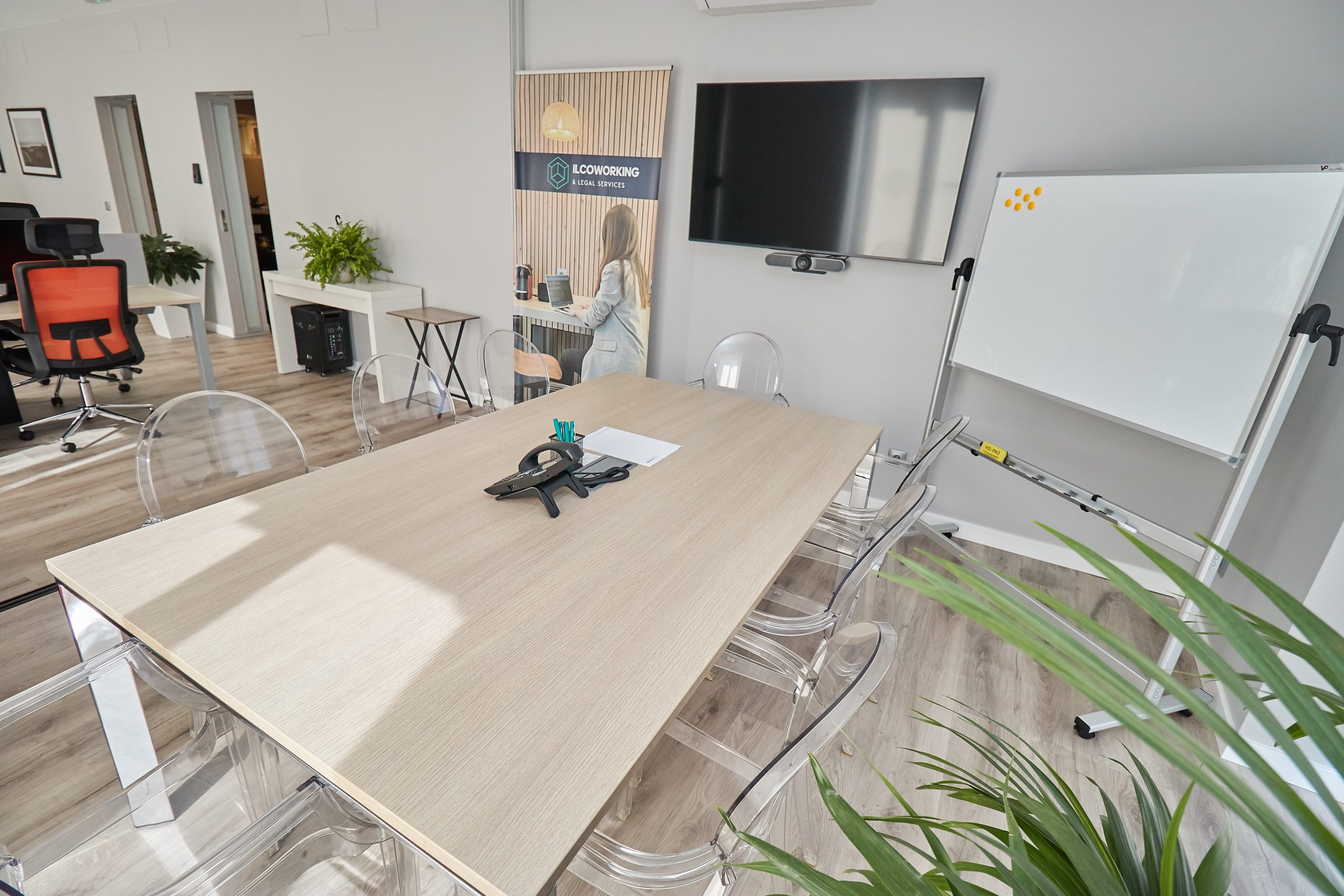
Organizing conferences and corporate events in Madrid requires careful planning, where the choice of venue plays a crucial role in the event's success. A simple room with tables and chairs is no longer sufficient. Today's corporate events demand versatile, technologically equipped spaces, strategically located to facilitate attendance for participants coming from different parts of the city.
Madrid has established itself as one of Spain's leading destinations for business events, boasting an increasingly professional infrastructure that allows companies of all sizes to organize everything from intimate presentations to large-scale conferences. The key lies in understanding what type of event you need to organize and choosing the venue that best suits your specific objectives.
Types of corporate events that need professional spaces

The variety of corporate events organized by companies has grown considerably in recent years, and each type has specific requirements regarding the space it needs.
Quarterly or annual results presentations typically require formal venues with a capacity of 20 to 50 people. The atmosphere should convey professionalism, and attendees expect high-quality audiovisual equipment to follow presentations with data, charts, and financial projections. The typical setup is a theater or auditorium style, where all attendees can clearly see the projection screen.
Product launches are among the most strategic events for many companies. Here, the atmosphere is just as important as the content. The venue must create anticipation, showcase the product prominently, and allow attendees to interact with it after the formal presentation. These events typically combine a conference component with a more informal networking session.
Internal team training sessions are probably the most frequent type of corporate event. These can include onboarding for new employees, training on new tools or processes, or the development of specific skills. spaces for training They require more participatory configurations that allow interaction between trainer and participants.
Workshops and brainstorming sessions need spaces that foster creativity and collaboration. Large tables where teams can work with materials, walls where they can stick sticky notes or poster board, and a less formal atmosphere that encourages open participation are essential. The rigidity of a traditional conference room can be counterproductive for these types of events.
Team building events, although often held outdoors or in specialized spaces, can also benefit from multipurpose rooms that allow for dynamic group activities. The space should be large enough and versatile to adapt to different activities.
Shareholder meetings or board meetings require smaller spaces but with the highest level of privacy and professionalism. A boardroom setup with seating for 8 to 15 people is ideal, and videoconferencing equipment is provided if some participants are joining remotely. The confidentiality of all discussions must be guaranteed.
Project kick-offs mark the beginning of important initiatives and usually bring together all the teams involved. Depending on the size of the project, they can require anywhere from one meeting room for 10 people up to spaces that accommodate 40 or 50. The atmosphere should be energetic and motivating.
Essential requirements for a corporate event space
The choice of venue cannot be based solely on capacity. There are multiple factors that determine whether a space will be suitable for your corporate event.
Location is critical in Madrid, a city where commutes can be time-consuming. A space well-connected by public transport reduces the likelihood of delays and absences. The area of Chamberí, especially around Glorieta de Bilbao, It offers a central location with excellent connectivity by both metro and bus, making it easy for attendees from anywhere in Madrid to arrive comfortably.
Capacity should take into account not only the exact number of confirmed attendees but also a safety margin. A space at 100% capacity feels overcrowded. Ideally, you should have a margin of 20-25%. If you expect 40 people, look for spaces with a capacity of 50. This also allows room to move around, circulate between stations, or rearrange the setup if necessary.
Audiovisual equipment makes all the difference between a professional presentation and an impromptu one. At a minimum, you need a projector or large-format screen, an audio system appropriate for the room size, and connectivity so the presenter can project from their device. For more sophisticated events, recording equipment, streaming capabilities, or videoconferencing for remote participants may be necessary.
WiFi connectivity isn't an extra; it's a basic necessity. At corporate events, virtually all attendees bring a laptop, tablet, or smartphone that they'll need to connect. The network must support many simultaneous connections without losing speed. A slow or intermittent connection can completely ruin an event if part of the presentation requires access to online resources.
Proper climate control is one of those factors that only becomes apparent when it fails. A room that is too hot or too cold directly affects the concentration and comfort of the attendees. The climate control system must be able to maintain a stable temperature throughout the event, regardless of whether it is summer or winter.
The acoustics of a space influence the quality of communication. A space with a lot of echo hinders comprehension, especially in presentations involving technical data or specific figures. Sound-absorbing materials on walls and ceilings, along with a good sound system, ensure that all attendees can hear clearly.
The lighting should be adjustable. During projector presentations, it's helpful to be able to dim the lights to improve screen visibility, but without completely darkening the room. During interactive activities or coffee breaks, brighter lighting is appropriate.
Flexible furniture allows you to adapt the space to the type of event. Tables and chairs that can be reconfigured in different layouts expand the possibilities for using the space. A room that only allows for an auditorium-style configuration limits the options for events you can organize there.
Acoustic privacy ensures that confidential conversations are not overheard outside the space. For board meetings, pre-publication results presentations, or any event where sensitive information is handled, soundproofing is non-negotiable.
Room configurations according to event type
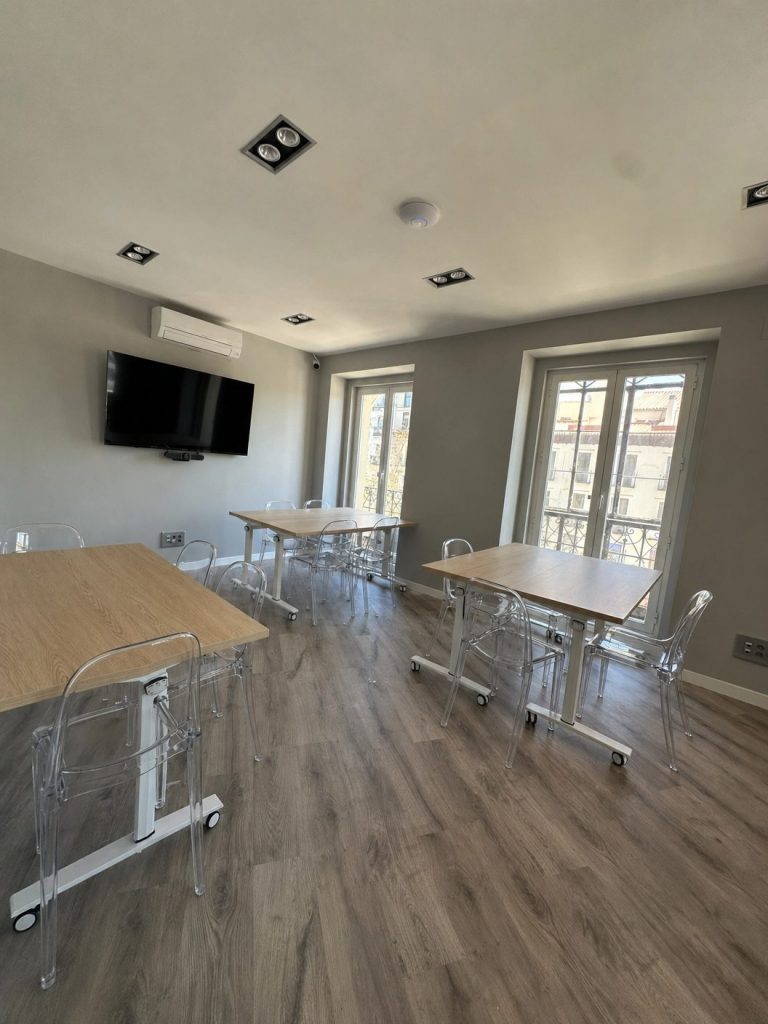
The physical layout of the space directly influences the dynamics of the event. There is no universally best configuration; rather, each layout is adapted to specific objectives.
The theater or auditorium-style setup maximizes the capacity of a space. All chairs face forward, in rows, without tables. It's ideal for conferences where communication is one-way, from the speaker to the audience. It allows for accommodating the largest number of people in a given space. However, it doesn't make it easy for attendees to take notes comfortably or interact with each other.
The classroom configuration adds individual tables in front of each chair. It slightly reduces seating capacity but offers much greater comfort to attendees who need to write, use laptops, or review documents during the event. It is the standard arrangement for corporate training sessions and workshops where participants are expected to actively work during the session.
The U-shaped arrangement places the tables in an open U shape facing forward. This greatly facilitates participation from all attendees, as they can see each other and the facilitator can move freely both inside and outside the U. It works very well for groups of 15-25 people in interactive sessions such as workshops, meetings, or participatory training. It does require more space than other configurations for the same number of people.
The boardroom or executive table is a long, rectangular table with seating on both sides and at the ends. It conveys formality and hierarchy. It is appropriate for board meetings, committee meetings, or negotiations involving two or more opposing parties. The number of participants is usually limited to 12-20 to allow for fluid conversation.
Round tables distributed throughout the space work exceptionally well for events that combine presentations with group work. Each table can accommodate 6-8 people working together on specific activities, and all tables can be oriented towards the front for general presentations. This is the preferred setup for conferences, networking events, or innovation events where collaboration is the goal.
The cocktail setup eliminates chairs and features only high bar-style tables distributed throughout the space. It's suitable for networking events, informal product launches, or events where the goal is for attendees to mingle and converse rather than sit and listen to presentations.
The hybrid format combines a presentation area with a theater or auditorium setup and a separate area with work tables, armchairs, or a coffee break space. This versatility allows for events to be organized in different phases: first a formal presentation for everyone, then work in smaller groups, and finally informal networking. It requires large spaces or the ability to use several coordinated rooms.
Essential technological equipment in 2026
The technology expected at corporate events has evolved significantly. What was a premium extra five years ago is now practically standard.
Projection systems have evolved from traditional projectors to large-format LED screens. These offer better image quality, don't require darkening the room, and allow for perfect viewing from any angle. For medium-sized rooms (20-30 people), a 75-85 inch screen is usually sufficient. For larger spaces, multi-screen setups or very high-lumen projectors are still necessary.
Professional audio isn't just about powerful speakers. It includes high-quality wireless microphones that clearly capture the speaker's voice without background noise, strategically placed speakers to ensure balanced sound throughout the room, and a mixing system that allows you to combine multiple audio sources if needed.
Integrated videoconferencing systems have gone from a luxury to a basic necessity. Many corporate events now include remote participants, whether because they work from other cities, are traveling, or simply for flexibility. A good videoconferencing setup includes a high-definition camera with automatic speaker tracking, ambient microphones with echo cancellation, and pre-configured software compatible with major platforms (Zoom, Teams, Google Meet).
Universal connectivity makes it easy for any participant to project content from their device without technical hassles. This includes HDMI and USB-C cables, as well as adapters for various laptops. Ideally, it also includes wireless connectivity for cable-free projection. The time wasted at each event connecting and testing devices multiplies with each presentation, so a system that works seamlessly with any device saves valuable time.
Interactive whiteboards have gradually replaced traditional whiteboards in corporate environments. They allow users to write and draw just like on a conventional whiteboard, but with the added advantage of being able to save everything written, send it to participants, and even interact with projected digital content. For brainstorming sessions or technical training, the difference is substantial.
Centralized room control greatly simplifies space management. A touch panel allows you to control lighting, projection, audio, and climate control without having to search for switches or controls throughout the room. This is especially useful when the event organizer is unfamiliar with the space and needs to make adjustments quickly.
Interactive voting or response systems allow for real-time audience participation. Attendees can respond to surveys, questions, or votes from their mobile phones, and the results are displayed instantly. For participatory events or training sessions where comprehension needs to be verified, these tools add a highly valued interactive dimension.
Complementary services that make the difference
Beyond the physical space and technological equipment, there are additional services that can significantly enhance the quality of your corporate event.
Proper catering and coffee breaks are much more than just a hospitality touch. For half-day or full-day events, offering coffee, water, and light snacks during breaks keeps attendees comfortable and focused. The quality of the catering also reflects on the event's level and the consideration shown to the attendees. It doesn't need to be extravagant, but it should be thoughtful and appropriate for the type of event.
A professional reception service adds a touch of professionalism from the moment attendees arrive. Having someone greet guests, manage accreditation, provide information about the facilities, and answer initial questions creates a very positive first impression. For large events, this service is practically essential, but it also adds significant value to medium-sized events.
Technical support during the event can be the difference between resolving an issue in two minutes and having it escalate into a problem that ruins part of the event. Having a technician available who is thoroughly familiar with the room's equipment and can quickly resolve any projection, audio, or connectivity problems provides the organizer with enormous peace of mind.
Professional recording services allow you to generate content that can be used later. Record the conference to distribute to employees who couldn't attend, to publish it on the corporate intranet, or to create marketing materials. The difference between a home recording with a mobile phone and a professional recording with good image and audio quality, properly edited, is enormous.
Simultaneous interpreting is essential when an event includes participants who do not share a common language. This can be done in person using booths and receivers, or remotely via videoconference. For multinational companies or international events, this service is indispensable.
Corporate materials and stationery include everything from notebooks and pens branded with the event logo to document folders, personalized attendee badges, and printed training materials if it's a training event. The careful presentation of these items contributes to the professional perception of the event.
Corporate photography professionally documents your event. It's not just about taking pictures, but about capturing key moments, interactions between participants, and generating visual material that can be used later in internal communications or on corporate social media. A professional photographer knows when and where to photograph without being intrusive.
Common mistakes when organizing corporate events and how to avoid them
The experience accumulated in organizing corporate events has identified recurring patterns of errors that are perfectly avoidable with proper preparation.
Underestimating setup time is probably the most common mistake. Organizers often assume that if the event starts at 10:00, they can arrive at 9:30 to prepare. In reality, you need at least an hour, ideally two, to set up presentations, test audio and video, organize catering, and resolve any last-minute issues. If the venue requires a specific furniture configuration, you'll need even more time.
Failing to perform a prior technical test of the audiovisual equipment is an unnecessary risk. Assuming the projector will work or that your laptop will connect without problems is tempting, but the reality is that incompatibilities or configurations requiring adjustments always arise. A test the day before, or at least two hours before the event, allows you to resolve any issues without pressure.
Ignoring the acoustics of a space until the day of the event can result in attendees not being able to hear the speaker properly. A room with excessive echo, an inadequate sound system, or background noise from other activities in the building seriously compromises the quality of the event. Visiting the space beforehand and verifying the acoustic conditions should be mandatory.
Overloading the schedule without allowing breaks leads to fatigue among attendees and drastically reduces attention spans. People cannot maintain full concentration for more than 60-90 minutes at a time. A 4-hour event needs at least two 15-20 minute breaks. A full-day event requires longer breaks and a sufficient lunch break.
Failing to confirm attendance until the last minute complicates planning for catering, equipment, and even venue selection. Having firm confirmations at least 48 hours in advance allows for necessary adjustments. Online registration systems with automatic confirmation make this process much easier.
Underestimating connectivity needs is becoming increasingly problematic. If your event has 30 people and they all need to connect with their devices, the Wi-Fi network must support that. Checking the available bandwidth and whether there are any limitations on the number of devices connected simultaneously will prevent problems on the day of the event.
Not having a backup plan for technical problems leaves the organizer without resources when an issue arises. What do you do if the projector fails, if the Wi-Fi connection drops, or if the speaker has a last-minute problem? Having alternatives planned in advance reduces stress and allows for an efficient response.
Choosing a location that's difficult to access significantly reduces attendance. If the venue is poorly served by public transport, lacks nearby parking, or is in a hard-to-find area, people will arrive late or simply won't show up. Ease of access is a critical factor in the actual attendance rate.
Realistic budget for corporate events in Madrid
Having clarity about the costs involved allows you to plan events within the available budget without sacrificing essential elements.
Venue rental typically represents between 30% and 40% of the total event budget. Rates vary considerably depending on location, capacity, and included equipment. coworking spaces that offer event rooms, Hourly rentals can start from €20 per hour for small rooms and go up to €80-€100 per hour for large, fully equipped spaces. For full-day events, negotiating full-day rates can be more economical than paying by the hour.
Materials and stationery are usually a smaller but not insignificant expense. Notebooks, pens, folders, name tags, and printed materials can cost between €5 and €15 per attendee, depending on the quality and quantity of materials you provide.
The key to optimizing your budget lies in identifying which elements are essential for your specific event and which are dispensable. An internal training event probably doesn't need elaborate catering or professional photography. A presentation to potential clients, however, should invest in these details because they are part of the image you project.
Event space rental in different areas of Madrid
The location of the event in Madrid influences both accessibility for attendees and the cost of the space.
Central Madrid, especially areas like Sol, Gran Vía, and Ópera, offers maximum centrality and brand recognition, but at premium prices. Spaces here can cost €50-€100 per hour for medium-sized rooms. The advantage is that virtually everyone knows the area, and it's easy to get to from anywhere. The disadvantage is the price and the fact that the area can get very crowded depending on the time of day.
Chamberí, and especially the Glorieta de Bilbao area, combines excellent accessibility with more moderate prices than the city center. Located near the center but in a more professional and less touristy environment, spaces like ILCOWORKING & LEGAL SERVICES in Glorieta de Bilbao They offer rooms from 20 euros per hour. The area has excellent public transport (Bilbao metro lines 1 and 4), multiple parking options, and an office environment that projects professionalism.
How to choose the perfect space for your event
The final decision on where to hold your corporate event should be based on an analysis of multiple factors weighted according to the importance of each one for your specific situation.
The first step is to clearly define the event's objectives. An internal training session, where functionality and price are key, is very different from a client presentation, where image and location are critical. Having clear objectives helps you prioritize the selection criteria.
The profile of the attendees determines which location will be most convenient. If they all come from the same area of Madrid, choosing a nearby venue simplifies travel. If they come from different areas, well-connected central locations like Chamberí are more equitable for everyone.
The type of setup you need limits your options. If your event requires large work tables, a space that only offers an auditorium-style configuration won't work. If you need to move furniture between different configurations during the event, you need a flexible space and staff willing to help you.
Specific technical requirements must be verified beforehand. If you're going to be live streaming, you need to confirm that your bandwidth is sufficient. If you require specific equipment such as a digital whiteboard or advanced videoconferencing system, verify that it is available and functioning correctly.
Visiting the space before making a decision is highly recommended. Photos and descriptions on websites are helpful, but seeing the space in person allows you to evaluate aspects that aren't captured in images: acoustics, actual lighting, the overall feeling of the space, and the condition of the equipment. If the venue provider allows or even recommends preliminary visits, it's a good sign of transparency.
Spaces for corporate events at ILCOWORKING Madrid
For companies looking for spaces in the Chamberí area, ILCOWORKING at Glorieta de Bilbao nº 1, 3rd floor right, represents an option that combines strategic location, flexibility, and complementary services that can be very practical.
The location at Glorieta de Bilbao makes it easily accessible from anywhere in Madrid. The Bilbao metro station, lines 1 and 4, is a one-minute walk away, and numerous bus lines stop in the area. For attendees arriving by car, there are several public parking garages within a 200-meter radius. This accessibility reduces the likelihood of delays and facilitates attendance.
The Rooms available for rent They can accommodate different event sizes and can be configured to meet specific needs. The flexible hourly rental model allows you to book exactly the time you need without long-term commitments. With rates starting at €20 per hour, it's accessible to both startups with tight budgets and established businesses.
The schedule from 8:00 a.m. to 8:30 p.m., Monday to Friday, covers the most common time slots for corporate events, from morning training sessions to evening presentations for professionals who work during the day.
Beyond room rentals, ILCOWORKING & LEGAL SERVICES offers complementary services that can simplify event organization. The possibility of combining the Room rental with other services As a coworking space for speakers who need to prepare their presentation, or private offices for preliminary meetings with key participants, it provides additional flexibility.
Added to this is a differentiating factor that often makes all the difference: the support of a friendly and efficient team, accustomed to handling day-to-day operational needs. From welcoming attendees to providing basic logistical support or preparing the venue, having accessible contacts allows organizers and speakers to focus on what matters most: the content and professional relationships.
For companies that organize corporate events on a recurring basis, flex office options They allow you to have a base in Madrid without the fixed costs of a traditional office, facilitating the organization of regular events.
You can contact us by phone at 91 117 94 82 or 900 264 918, or by email at info@ilcoworking.es. The booking process is direct, without intermediaries, making it easier to coordinate specific needs or resolve doubts about specific configurations.
Trends in corporate events for 2026
The corporate events landscape continues to evolve, incorporating trends that respond to new ways of working and the expectations of participants.
Hybrid events, where some attendees are physically present and others follow the event online, have become the standard format, not the exception. This requires venues to have appropriate equipment such as cameras, microphones, and connectivity to offer a quality experience to remote participants as well. The ability to host hybrid events significantly expands their potential reach.
Sustainability is no longer just an added value; it's becoming a basic expectation. Event organizers are looking for venues with energy certifications, that minimize plastic use, and that manage waste properly. Catering is also evolving toward more sustainable and healthy options, with a preference for local suppliers and seasonal products.
Shorter, more dynamic formats are gradually replacing long days of conferences. Intense, participatory 60-90 minute sessions work better than half-days of passive presentations. Organizers are looking for spaces that allow for quick changes in format, transitioning from presentations to group work to networking.
Personalizing the attendee experience is becoming increasingly important. This ranges from event-specific apps that enable networking among participants to content tailored to different profiles within the same event. Spaces that facilitate this personalization, with different zones or simultaneous configurations, offer significant advantages.
Event measurement and analytics allow for a more accurate evaluation of ROI. Registration systems that capture engagement, real-time surveys, and post-event follow-up help demonstrate the value of investment in events and improve future editions.
Checklist to organize your corporate event
A systematic checklist ensures that you don't forget any important aspects of the organization.
8-12 weeks prior:
- Define clear objectives for the event
- Establish total available budget
- Identify optimal date and time
- Estimate expected number of attendees
- Research space options
- Visit 2-3 finalist spaces
- Reserve the chosen space
4-6 weeks prior:
- Confirm speakers and content
- Design a detailed event agenda
- Hire catering if necessary
- Hire additional services (photography, recording)
- Send invitations to attendees
- Prepare graphic materials and presentations
- Confirm required technical equipment
2 weeks prior:
- Track attendance confirmations
- Adjust catering according to confirmed number
- Confirm all suppliers
- Prepare printed material if necessary
- Coordinate with the space for specific needs
- Perform a technical test of the equipment
1 week prior:
- Send reminders to confirmed attendees with practical details
- Reconfirm final number with caterer
- Prepare name tags and welcome materials
- Confirm access times to the assembly space
- Verify the availability of a contingency plan B
Day of the event:
- Arrive 2 hours early for setup
- Test all technical equipment
- Organize signage and reception
- Coordinate with support team
- Photograph the event for documentation
- Gather feedback from attendees
Post-event:
- Send thank you to attendees
- Share material or recordings if applicable
- Gather formal feedback through a survey
- Analyze results vs objectives
- Documenting lessons learned for future events
Frequently asked questions about organizing corporate events
How far in advance should I book a space for a corporate event?
It depends on the size of the event and the flexibility of the dates. For events of up to 30 people with flexible dates, 2-4 weeks is usually sufficient. For larger events or very specific dates (the beginning of the term, for example), booking 6-8 weeks in advance ensures availability. The most sought-after venues in central locations fill up sooner.
Can I visit the space before booking?
Most professional spaces allow and even recommend preliminary visits. This lets you verify that the space meets your expectations in terms of size, equipment, and layout. Contacting them beforehand to schedule a visit ensures that someone will be available to show you the facilities and answer your questions.
What happens if I need to cancel or modify the reservation?
Cancellation policies vary depending on the venue. Some allow free cancellations with 48-72 hours' notice, while others apply penalties. It's essential to clarify these conditions before confirming your booking. For important events, considering some form of cancellation insurance can provide peace of mind.
Does the price include all technical equipment or are there additional costs?
This varies greatly from venue to venue. Some include a projector, screen, basic audio, and Wi-Fi in the base price. Others charge extra for the use of advanced equipment such as videoconferencing systems, digital whiteboards, or recording equipment. Ask for a clear breakdown of what's included and what costs extra before making a decision.
Can I bring my own catering or do I have to use specific suppliers?
Some venues have their own catering services or exclusive agreements with specific suppliers. Others allow complete freedom to bring in outside caterers. If you have specific supplier preferences or require a particular type of food, check this policy before booking. In some cases, there's room for negotiation.
Is technical support available during the event?
This also varies. Some venues include basic technical support to help set up equipment initially. Ongoing support throughout the event may incur an additional cost. If your event has a complex technical component, confirming the availability of technical support can prevent problems.
Can I reserve the space outside of normal business hours?
It depends on the venue. Some operate strictly during office hours, while others offer flexibility for evening or weekend events, with possible surcharges. If you require specific times outside of regular business hours, inquire about availability and additional costs.
How to manage access for attendees arriving at different times?
For events where attendees don't all arrive at the same time, coordinate with the venue how access will be managed. Some buildings require ID or have access control. If you hire a receptionist, they can manage arrivals. Sending clear information to attendees about how to access the venue reduces confusion.
Conclusion: the importance of choosing the right space
The space where a corporate event is held is not merely a container for people. It is an active factor that influences the perception of professionalism, the comfort of the attendees, the effectiveness of the communication, and ultimately, whether the event achieves its objectives.
A poor choice of venue can undermine even the best content. Recurring technical problems, uncomfortable acoustics, access difficulties, or simply an unsuitable environment can distract attendees from the message you wanted to convey. Conversely, a well-chosen venue goes unnoticed precisely because everything works as it should, allowing the content and interactions to take center stage.
Investing time in researching options, visiting venues, and verifying details before making a decision pays off handsomely in peace of mind during the planning process and in the quality of the final event. It's not about finding the most expensive or best-equipped venue, but rather the one that best suits your event's specific needs and budget.
Madrid offers a wide range of options, allowing companies of all sizes to find suitable venues. From startups organizing their first event to corporations with annual event programs, there are solutions tailored to every need. The key is to have clear selection criteria and not settle until you find the space that truly meets your requirements.
If you're considering organizing your next corporate event in the Chamberí area, we invite you to visit ILCOWORKING & LEGAL SERVICES. Its strategic location, flexible rental options, and the possibility of combining different services can make organizing your event much easier.

